








What’s Changed in Your Hormones, Metabolism, and Weight After 40 – and How to Lose Weight in Midlife Without Restriction
January is relentless.
The diet noise is loud. The “new year, new you” messaging is everywhere. You can’t scroll without seeing something telling you to shrink, restrict, or reset.
January brings:
- “Quick-fix” weight loss challenges (7, 14, 28 days – take your pick)
- The pressure to “bounce back” instead of tune in
- Anxious urgency disguised as motivation
But here’s what doesn’t get said enough:
You’re not broken. You haven’t failed. And your body isn’t the enemy.
The truth?
Those old weight loss strategies that used to work in your 20s and 30s? They’re no longer designed for how your body works today.
That’s not your fault. That’s biology – and it’s time we stop pretending otherwise.
You haven’t lost your willpower.
You’ve entered a new phase of life that requires a new strategy – one rooted in understanding, not restriction.
Let’s talk about what’s changed – and what actually works now.
Why “eat less, move more” stops working after 40
For decades, we were sold a simple formula: eat fewer calories and exercise more. On the surface, it looked like it worked – cut back on snacks, hit a few extra workouts, and the scale seemed to respond.
But even then, the approach was flawed. It never addressed the quality of calories, the role of hormones, or how stress and sleep impact metabolism.
And by the time you hit your 40s, that outdated formula doesn’t just fall short – it backfires.
You start eating less… and gain weight anyway.
You push through longer workouts… and feel more depleted.
You follow the same plan that used to seem effective — and nothing happens.
This isn’t about discipline. It’s not about motivation or willpower.
It’s about physiology.
Your body isn’t broken – it’s responding to real hormonal and metabolic shifts that change how it processes food, stress, movement, and recovery.
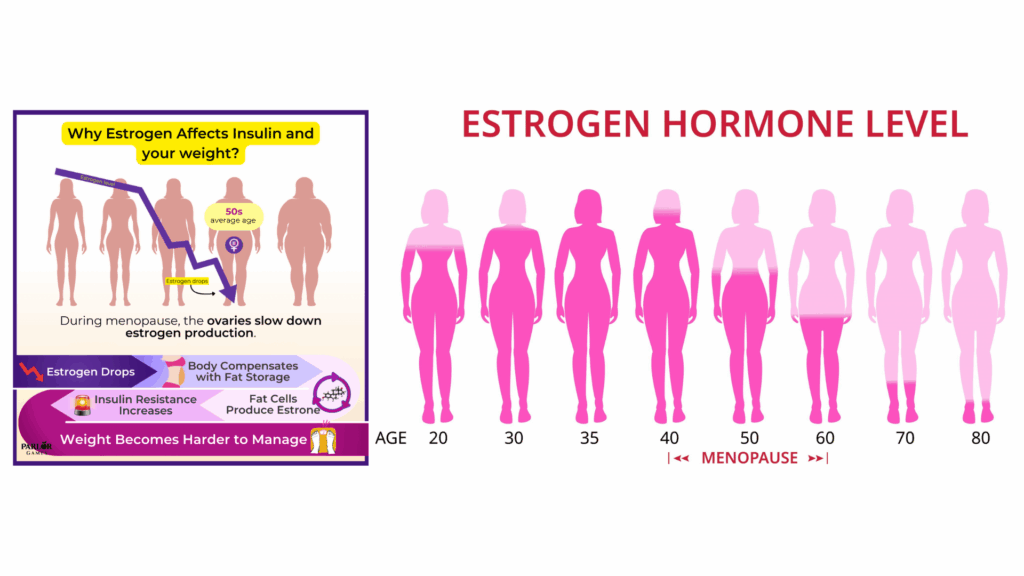
As estrogen declines, muscle mass reduces, insulin sensitivity drops, and cortisol becomes more dominant. These shifts affect everything from fat storage to energy production, making the old strategies not only ineffective – but sometimes harmful.
Trying to “eat less and move more” without adjusting for these changes can spike stress, disrupt sleep, stall progress, and make fat loss harder than ever.
The solution isn’t to double down.
It’s to work smarter – with your body, not against it.
What’s actually changed in your body
Midlife isn’t just about getting older.
It’s about fundamental shifts in your body’s chemistry – hormonally, metabolically, and neurologically. These changes don’t mean your body is broken. But they do mean it’s working differently than it used to.
And when you keep applying the same strategies that once worked – and they suddenly don’t – it’s confusing. Frustrating. Emotional.
“I used to think I just wasn’t trying hard enough. Once I understood what estrogen was doing, everything clicked.”
— Coaching client, 52
Here’s what’s really going on under the surface:
1. Muscle mass has declined – unless you’ve trained to preserve it
Starting as early as your 30s, you begin to lose muscle mass at a rate of 3% to 8% per decade – a process called sarcopenia.
When estrogen levels begin to drop in perimenopause and menopause, that muscle loss speeds up dramatically.
Why it matters:
Muscle is your metabolic engine. Less muscle = fewer calories burned at rest, more fatigue, and a harder time staying strong and steady.
You could be eating and moving the same as you did in your 20s, but without muscle on board, your body doesn’t use energy the same way.
Important note: Cardio alone won’t rebuild lost muscle. You need resistance training – especially now.
→ Takeaway: Midlife metabolism is powered by muscle. You have to lift to keep it.
2. Insulin sensitivity declines
As estrogen drops, insulin sensitivity often decreases. That means your body becomes less efficient at processing glucose from food.
When this happens, you may notice:
- Fat gain around your belly
- Sugar cravings that feel impossible to ignore
- Energy crashes after meals
- More bloating or inflammation
This is why refined carbs hit differently in midlife. It’s not just willpower – it’s how your body is now handling blood sugar.
→ Takeaway: Stable blood sugar = fewer cravings, steadier energy, and less midsection weight.
3. Cortisol starts calling the shots
Your 20-something self could bounce back from all-nighters and bootcamp workouts. But your midlife nervous system is more sensitive – and less forgiving.
Chronic stress (emotional, physical, or even nutritional) keeps cortisol high. And when cortisol stays elevated, it:
- Encourages belly fat storage
- Disrupts sleep
- Impairs blood sugar regulation
- Breaks down muscle over time
This is why pushing through exhaustion or overtraining can backfire. Your body is asking for support – not intensity.
→ Takeaway: Your nervous system in midlife needs support, not stress. Recovery matters more than ever.
4. Estrogen declines – and that affects nearly everything
Estrogen isn’t just about your period or hot flashes. It’s involved in over 400 different processes in the female body – including how you use insulin, how your brain functions, and how strong your bones and muscles are.
As estrogen declines, you may experience:
- More fat storage (especially around your waist)
- Less muscle definition
- Changes in memory or mood
- Joint discomfort
- Greater sensitivity to stress and poor sleep
When estrogen was high, it buffered a lot. Without that buffer, your systems have to work harder to stay balanced.
→ Takeaway: Less estrogen = more vigilance. You need smarter strategies to stay steady.
This isn’t about mindset.
This isn’t about motivation.
It’s about honoring real biological changes – and giving your body what it actually needs now, not what used to work before.
Midlife habits that actually move the needle
Eat for hormone health, not calorie guilt
If you’re in your 40s, 50s, or beyond and wondering why your body isn’t responding the way it used to – you’re not alone. And the solution isn’t to push harder.
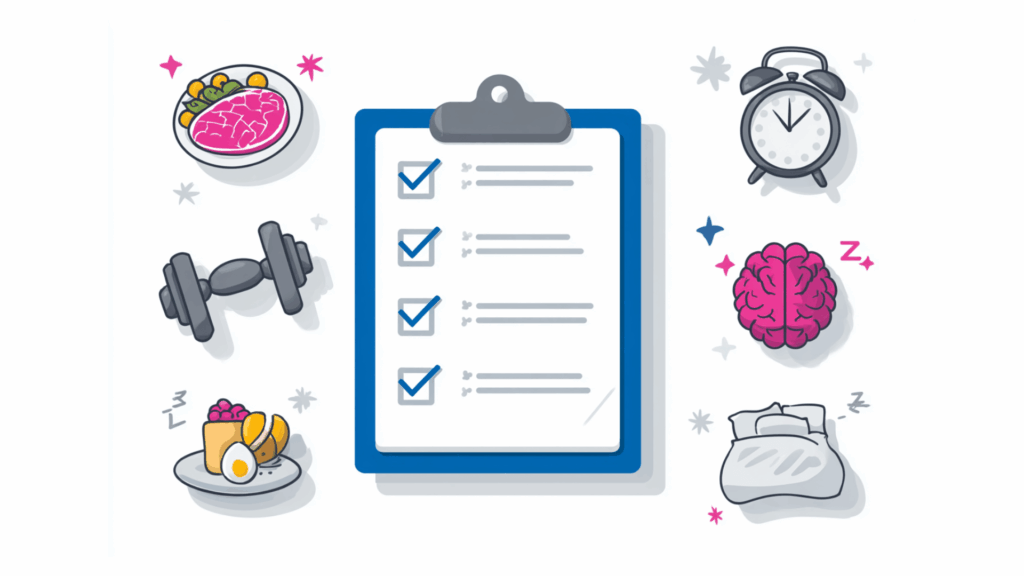
At this stage, success isn’t about restriction. It’s about working with your body, not against it. These habits actually move the needle when it comes to fat loss, energy, and hormonal balance in midlife.
1. Fix your sleep – it’s a hormone strategy, not just a wellness bonus
Poor sleep in midlife is more than frustrating – it disrupts nearly every system in your body.
Sleep deprivation increases cortisol, dysregulates hunger hormones like ghrelin and leptin, and reduces your ability to make aligned food choices the next day.
Many women don’t realize this: improving sleep can do more for weight regulation than a new meal plan ever will.
“Once I fixed my sleep, I stopped obsessing over food. My body stopped panicking.”
— Coaching client, 49
Start here:
- Stick to a consistent bedtime (even on weekends)
- Avoid screens at least 1 hour before sleep
- Try magnesium, journaling, or breathwork to calm your nervous system
→ Takeaway: Better sleep = better hormones, better hunger cues, and better energy.
2. Eat enough – and eat to stabilize, not deprive
The most common midlife mistake? Undereating in an attempt to lose weight – only to feel exhausted, inflamed, and stuck.
Eating too little slows your metabolism, spikes cortisol, and makes your body feel unsafe. This often triggers more fat storage – not less.
Instead:
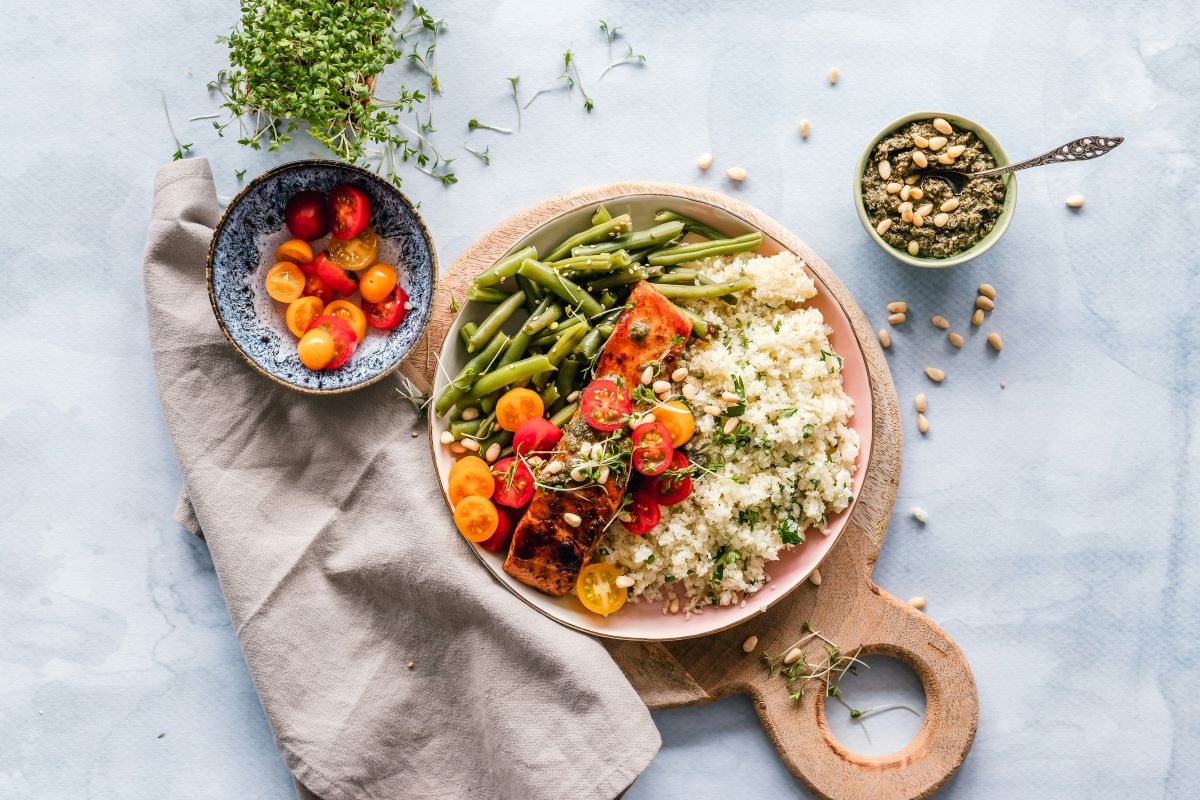
- Aim for 25–30g of protein per meal
- Include healthy fats (avocado, olive oil, pasture-raised eggs)
- Choose slow carbs like squash, lentils, or quinoa
Skipping meals – especially breakfast – often backfires in midlife.
→ Takeaway: Your body needs nourishment to feel safe enough to let go of stored weight.
3. Balance your blood sugar (even if you’ve never had to before)
Fluctuating blood sugar leads to crashes, cravings, and hormone chaos – especially when estrogen and progesterone are already shifting.
Support your body by:
- Building meals around protein, fat, and fiber
- Avoiding ultra-processed snacks
- Skipping coffee on an empty stomach (it can spike cortisol)
Extra tip: Walk after meals when possible – it helps reduce blood sugar spikes and improves digestion.
→ Takeaway: Balanced blood sugar = steadier mood, fewer cravings, and more sustainable fat loss.
4. Strength train like your bones, brain, and metabolism depend on it (because they do)
Cardio may have worked in your 20s. In midlife, strength training is essential – for muscle, metabolism, insulin sensitivity, and long-term vitality.
Start with:
- 2 sessions a week using progressive overload
- Focus on building strength, not just burning calories
This isn’t about aesthetics – it’s about protecting your bones, brain, and energy long-term.
→ Takeaway: Muscle is your midlife superpower. Lifting weights is non-negotiable.
5. Lower cortisol if you want to lose fat (especially around the middle)
Your nervous system is more sensitive in midlife – especially with declining estrogen. High cortisol levels can block fat loss, disrupt sleep, and worsen inflammation.
To lower stress:
- Get outside for daily walks (especially morning light)
- Use breathwork or EFT to regulate your nervous system
- Take real rest days (not “active recovery” disguised as more output)
→ Takeaway: Lower stress = lower cortisol = better results. Your nervous system is the foundation.
What to stop doing now
If it feels like your body is fighting you, chances are you’re still relying on strategies that worked in a different season of life. What got you results at 25 might be the very thing stalling progress at 45.
These outdated habits don’t just plateau progress – they can work against your hormones, nervous system, and long-term wellbeing.
Let go of the old rules. Here’s what to shift:
Outdated habits vs Hormone-smart alternatives
| Habit to Drop | What to Do Instead |
| Skipping breakfast | Prioritise protein in the morning to stabilise blood sugar and cortisol |
| Fasting aggressively | Time your meals around your cycle and recovery needs |
| Overdoing cardio | Lift heavier with proper rest and recovery |
| Under-eating | Fuel consistently to support metabolism and hormone health |
| Ignoring strength training | Build muscle to protect metabolism, bones, and blood sugar |
| Judging progress by the scale | Track energy, sleep, strength, and body composition changes |
“No, you’re not ‘too old to lift weights’ – your body needs the signal.”
Key shifts to make
- Stop over-restricting calories
Chronic undereating signals stress, slows your metabolism, and increases fat storage. It’s not discipline – it’s depletion. - Ditch meal skipping (especially breakfast)
Skipping breakfast can spike cortisol and send your blood sugar on a rollercoaster all day. Your body needs rhythm, not restraint. - Stop fasting aggressively without support
Fasting without strategic refeeding, adequate sleep, or recovery? That’s a cortisol storm waiting to happen. Use fasting intentionally, not reactively. - Move away from endless cardio and HIIT
Long workouts + poor sleep = muscle breakdown, not fat loss. Swap the spin bike for strength training and your hormones will thank you. - Start strength training (even if you’ve never lifted before)
If you’re not building muscle, you’re losing it. And muscle is midlife magic: it keeps your energy, metabolism, and blood sugar stable. - Let go of the scale as your only marker
Midlife fat loss often looks like recomposition – not weight loss. That means more muscle, less fat, and the same weight. Don’t let numbers override your progress.
This isn’t a discipline problem
Midlife isn’t a failure of willpower.
It’s your body asking for a new strategy – one rooted in clarity, compassion, and hormone-smart choices.
When you stop punishing your body and start supporting it?
Everything shifts.

So where do you start?
Start with one thing.
Not everything. Not perfectly. Just one thing that feels doable today.
→ Add a protein-rich breakfast instead of running on adrenaline.
→ Swap your third coffee for an actual lunch that fuels you.
→ Pick up a pair of weights instead of punishing yourself with another cardio class.
→ Pause the inner critic and ask, What does my body need right now?
Midlife isn’t a setback.
It’s a turning point – a chance to work with your body, not against it.
To stop reacting and start responding.
To stop striving and start supporting.
You’re not lazy.
You’re not failing.
You’re not behind.
“You’re in a different chapter – and this chapter needs different tools.”
This isn’t about doing more.
It’s about doing what matters – with intention, clarity, and respect for the woman you are now.
Your body is wise.
And when you start listening to her, she will lead you exactly where you need to go.
Start here
Start with one habit – and if you want support personalising it for your hormones, lifestyle, and goals…
Book a session with me.
You’ll leave with a clear next step and a plan that works with your body, not against it.
🗓️ Book your Rhythm Reset mini-session
🌀 Learn more about Fasting Lifestyle Coaching
The content provided in this post is for informational purposes only and is not intended to be a substitute for professional medical advice, diagnosis, or treatment. Always seek the advice of your physician or other qualified health provider with any questions you may have regarding a medical condition. Never disregard professional medical advice or delay in seeking it because of something you have read in this post.











+ Show / Hide Comments
Share to: